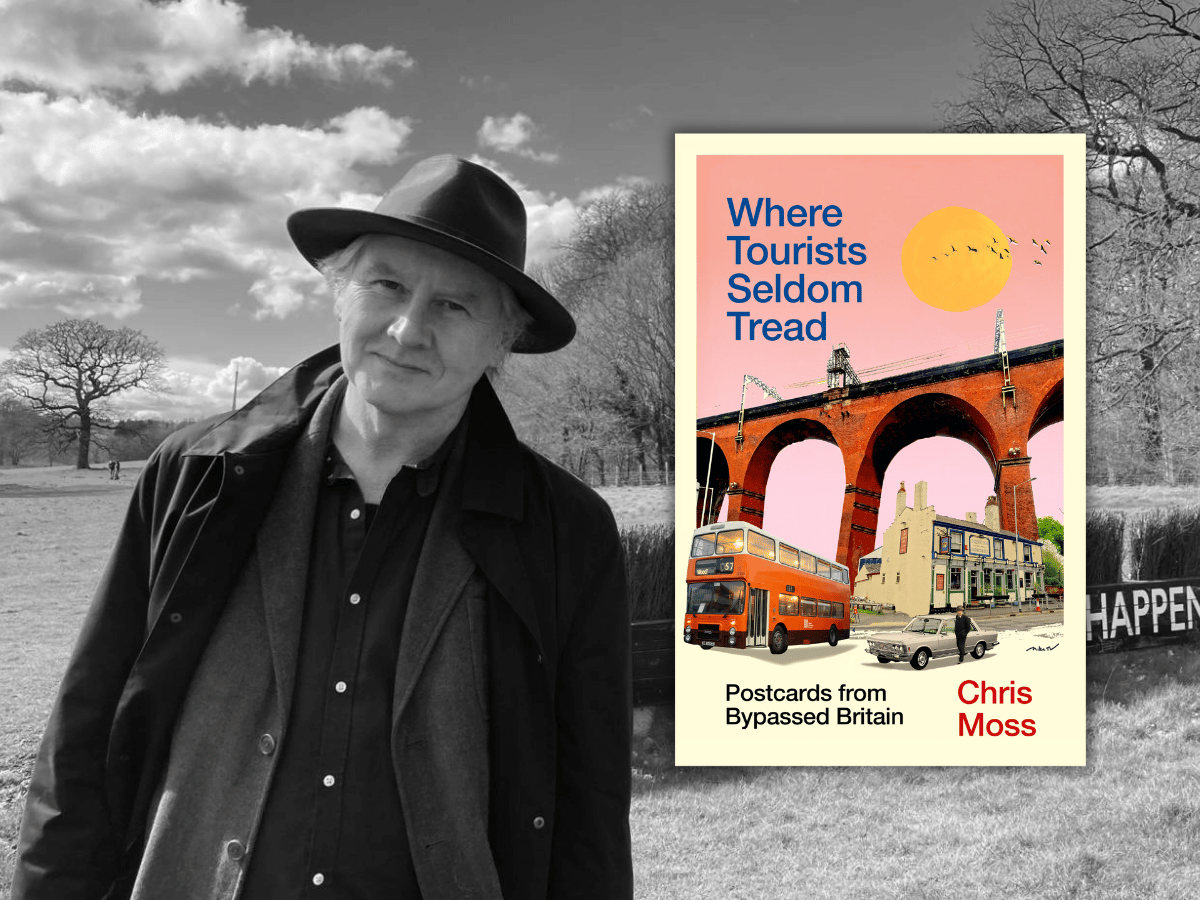
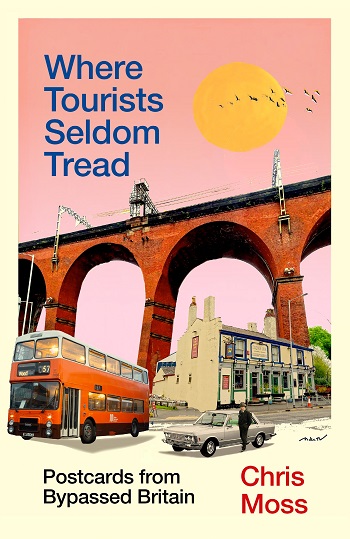
Where Tourists Seldom Tread is an ode to curiosity and adventure close to home, and an antidote to the dispiritingly widespread disinterest in what lies on our own doorstep, sneering attitudes to “crap towns”, relentlessly negative media portrayals and the ironic transmutation of the term “travel” to mean “sitting statically by a Spanish pool for a week”.
Chris Moss’ mission is to roam the UK exhuming buried histories, hints of which are hidden in plain sight, and seeking out character amid corporate and architectural blandification. In this, he feels an affinity with photographer Martin Parr: both set out to see the extraordinary in the apparently mundane. In these terms, Barnstaple and Harwich are relatively easy sells, whereas in Slough the mundane is perversely refreshing, “a merciful release from all the National Trust prettiness and class voyeurism” of the surrounding area.
Some of the featured towns and cities are isolated, at the end of the line, out on a limb. The rest are “halfway to elsewhere”, suffering from “chronic in-betweenness” and the “bullying centripetal influence” of London or nearby conurbations. Gateshead is unusual in proudly standing up to its oppressor, flaunting the Baltic and the Glasshouse directly across the Tyne as well as the Angel Of The North and the Metrocentre. Former industrial hubs are often snobbishly dismissed as cultural backwaters, but Moss pointedly sings the praises of museums and galleries in Wolverhampton, Walsall and Doncaster, and traces Paisley’s punk past.
The subtitle of the book, born of a series of Guardian articles, is a deliberate pre-emptive defence: the chapters are mere “postcards”, Moss conceding that “superficiality is inevitable when you are a day tripper or weekend visitor, passing through”. While he establishes the historical significance of every place, detailing notable figures and events and liberally dispensing golden nuggets of trivia, the case for paying a visit in the present is not always quite so compelling.
Two Welsh cities feature, with Wrexham described in terms of energy and regeneration – this is tied to its football team’s rising fortunes, though Moss remains sceptical about the strength and authenticity of the Hollywood owners’ attachment. In Newport, he visits the museum and in city centre pub the Murenger, which he says “has the conspiratorial gloom of an era when inns were used for plotting insurrection”. Conversely, in the very first sentence the River Usk at low tide is dubbed “a forlorn ditch”; later, Moss will characterise Newport as “full of people who look hard up, out of touch, stoned, lost”. At least he signposts readers in the direction of Ann Drysdale’s Real Newport, a more in-depth and charitable portrait.
By and large, though, Where Tourists Seldom Tread is an enthusiastic potted guide to an overlooked and underappreciated Britain that will delight “offbeat excursionists”. It concludes with pleas for civic investment and sensitive development that avoids “the indiscriminate removal of the cherished”, and an encouragement “to be a curious stranger in your heartland”.
Where Tourists Seldom Tread: Postcards From Bypassed Britain, Chris Moss (Faber)
Price: £20. Info: here
words BEN WOOLHEAD